How Do Sheet Metal Hinges Improve Durability and Precision in Industrial Applications?
Sheet metal hinges are essential mechanical components used in enclosures, cabinets, machinery doors, electrical boxes, automotive assemblies, and industrial equipment. Choosing the right hinge directly affects product lifespan, alignment accuracy, corrosion resistance, and operational stability. This article explains how sheet metal hinges work, what problems buyers commonly face, how to choose the right type, and why precision manufacturing matters when sourcing reliable hinge solutions.
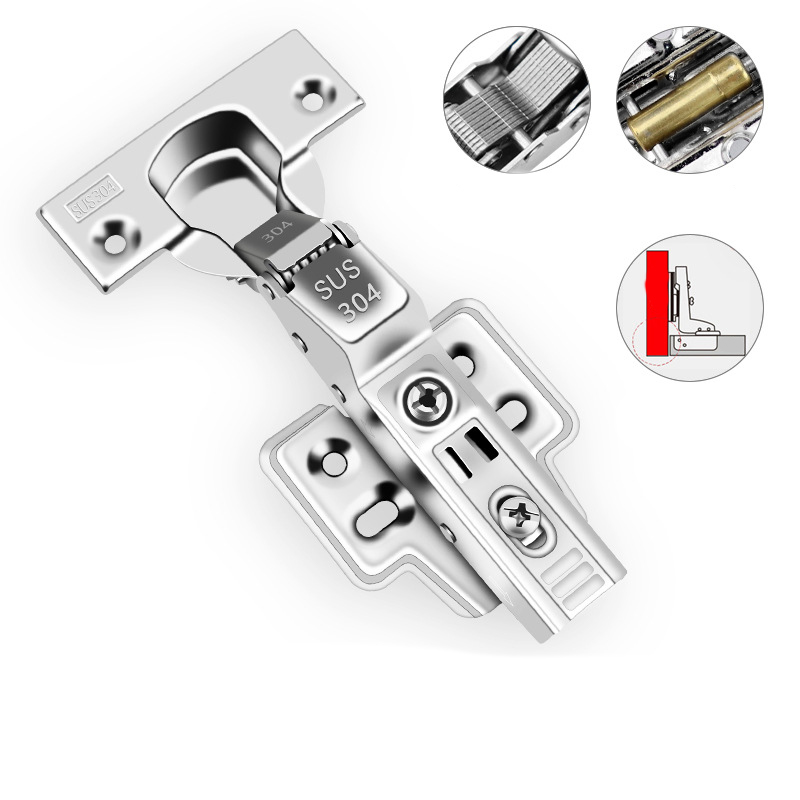
Table of Contents
- 1. What Are Sheet Metal Hinges?
- 2. Common Customer Pain Points
- 3. How Do Sheet Metal Hinges Work?
- 4. Types of Sheet Metal Hinges
- 5. Material Selection Guide
- 6. How to Choose the Right Hinge
- 7. Why Manufacturing Quality Matters
- 8. FAQ
1. What Are Sheet Metal Hinges?
Sheet metal hinges are pivoting hardware components fabricated from stamped or formed metal sheets. Their main purpose is to connect two panels while allowing controlled rotational movement between them. They are widely used in:
- Electrical enclosures
- Industrial control cabinets
- Automotive panels
- Medical equipment doors
- Machine covers and access panels
- Furniture and metal storage systems
Unlike plastic hinges or cast hinges, sheet metal hinges offer high structural integrity, compact design, and better load-bearing capability under repeated use.
2. Common Customer Pain Points
Many buyers encounter recurring issues when selecting hinges for industrial products:
| Problem | Impact |
|---|---|
| Poor corrosion resistance | Rust reduces lifespan in humid environments |
| Loose rotation tolerance | Causes misalignment and unstable movement |
| Weak load capacity | Door sagging and mechanical failure |
| Inconsistent dimensions | Assembly line fitting problems |
| Low cycle durability | Frequent replacement increases cost |
Understanding these risks helps procurement teams avoid hidden maintenance expenses and production delays.
3. How Do Sheet Metal Hinges Work?
Sheet metal hinges function through a rotational pin mechanism joining two leaf plates. One leaf attaches to the fixed structure, while the other mounts to the moving panel. The hinge pin acts as the rotational axis.
The performance depends on:
- Pin precision tolerance
- Leaf thickness consistency
- Bending angle accuracy
- Surface finishing quality
- Load distribution design
When properly engineered, the hinge ensures smooth opening, accurate alignment, and long operational life even under heavy repetitive cycles.
4. Types of Sheet Metal Hinges
Different applications require different hinge structures:
- Butt Hinges: Standard industrial cabinet doors
- Continuous Piano Hinges: Long doors requiring even load distribution
- Concealed Hinges: Hidden installations for cleaner appearance
- Detachable Hinges: Easy panel removal for maintenance
- Spring Hinges: Automatic return-close applications
Choosing the wrong hinge type often causes premature wear or structural instability.
5. Material Selection Guide
Material selection determines hinge durability under different environmental conditions:
| Material | Advantages | Typical Use |
|---|---|---|
| Stainless Steel | Excellent corrosion resistance | Outdoor & marine environments |
| Carbon Steel | High strength, economical | Industrial machinery |
| Aluminum | Lightweight and rust-resistant | Light-duty enclosures |
| Brass | Decorative finish and corrosion resistance | Decorative metal products |
6. How to Choose the Right Hinge
Before ordering, evaluate these five key factors:
- Required load capacity
- Opening angle range
- Environmental exposure conditions
- Installation space limitations
- Expected opening cycle frequency
For customized projects, dimensional tolerances and mounting hole patterns should always be verified before mass production.
Professional manufacturers like Xiamen Huaner Technology Co., Ltd. provide customized fabrication services to ensure precise hinge compatibility for specialized industrial designs.
7. Why Manufacturing Quality Matters
Precision stamping, CNC bending, laser cutting, and surface finishing directly influence hinge consistency. High-quality production reduces:
- Assembly mismatch rates
- Surface burr defects
- Premature pin wear
- Rotational friction instability
Reliable suppliers maintain strict dimensional inspections and fatigue cycle testing to guarantee long-term performance.
If your product depends on repeated motion reliability, investing in well-manufactured hinges prevents expensive field failures later.
8. FAQ
Q1: How long do sheet metal hinges typically last?
Depending on material and usage frequency, industrial-grade hinges can last tens of thousands of opening cycles.
Q2: Can sheet metal hinges be customized?
Yes. Custom dimensions, hole patterns, finishes, thicknesses, and materials are commonly available.
Q3: What finish is best for corrosion protection?
Powder coating, zinc plating, and stainless steel passivation are common corrosion-resistant options.
Q4: Are stainless steel hinges always better?
Not always. Stainless steel offers superior corrosion resistance, but carbon steel may be better for cost-sensitive heavy-duty applications.
Q5: Where can I source reliable custom sheet metal hinges?
Experienced manufacturers such as Xiamen Huaner Technology Co., Ltd. can provide engineered solutions tailored to industrial specifications.
Need durable, precision-made sheet metal hinges for your next project? Xiamen Huaner Technology Co., Ltd. delivers customized hinge manufacturing solutions designed for performance, consistency, and long service life. Contact us today to discuss your specifications and get expert support for your application.